

The fastest reliable way to find a keynote speaker is to define the one outcome you want from the talk, then search a verified directory or speakers bureau that shows evidence of real past engagements. Check three candidates' availability against your date before you fall in love with anyone. A directory like SpeakersTrail works well as a first stop because every listing links back to a public conference agenda, so you can shortlist and verify in the same sitting.
TL;DR:
- Verified directories linking speakers to recent conference agendas enable quick, reliable verification of past engagements without extensive reference checks.
- Booking in-demand speakers requires a 6 to 12-month lead time, while mid-tier options are generally available within 3 to 6 months, especially for virtual formats.
- Full, unedited talk recordings and verifiable agenda proof are the strongest signals of a speaker’s reliability and actual experience.
- Confirming customization, audience engagement, technical needs, and clear outcomes during vetting reduces last-minute surprises and ensures session relevance.
- Using evidence-based directories saves time, cuts down vetting effort, and helps avoid unverified bio claims, making speaker selection faster and more certain.
Table of Contents
- Where to Find Keynote Speakers: Five Channels That Actually Work
- How Do You Vet and Shortlist Keynote Speakers?
- What Do Keynote Speakers Cost, and When Should You Book?
- Booking a Keynote Speaker: The Process and Contract Checklist
- Why Evidence-First Directories Cut Your Vetting Time in Half
- A Planner's Perspective on Speed Versus Certainty
- Find Your Keynote Speaker With SpeakersTrail
- Sources
- FAQ
Where to Find Keynote Speakers: Five Channels That Actually Work
Every sourcing route trades speed for certainty in a different way, and knowing which trade you're making saves you from a bad hire.
- Verified directories work best when you need a fast, trustworthy shortlist. A platform linking each speaker to their actual conference appearances lets you confirm someone really delivered the talk you're watching clips of, rather than trusting a polished bio page.
- Speakers bureaus and agents earn their commission when you need curation and logistics handled for you. Bureaus vet talent, negotiate fees, and manage travel, which matters when your internal team is stretched thin. The trade off is cost and sometimes less transparency about who's actually available versus who the bureau wants to place.
- Network and referrals remain the best route for niche audience fit. A colleague who booked a speaker for a similar audience last year can tell you things no bio will: how the speaker handled Q&A, whether they adjusted content on the fly, whether the room stayed engaged past minute twenty.
- Direct outreach makes sense when you already have someone specific in mind. Skipping the bureau layer often saves the commission and speeds up communication, though you take on the vetting and negotiation yourself.
- Search, conference agendas, and social video are discovery tactics, not verification tools. A great LinkedIn clip proves someone can talk to a camera. It doesn't prove they can hold a ballroom of 800 people, which is why any name you find this way needs a second layer of checking before it goes on your shortlist.
How Do You Vet and Shortlist Keynote Speakers?
Start from the outcome, not the person. Write down the single result you want attendees to walk away with, then score every candidate against that outcome instead of against how impressive their client list looks.
From there, the vetting sequence is straightforward:
- Watch full, unedited talks whenever they're available, not just highlight reels. A three-minute sizzle clip can make anyone look sharp; a full recording reveals pacing, audience handling, and whether the material actually lands.
- Call references from similar events. Ask what the room felt like, not just whether the speaker showed up on time.
- Ask about customization. Will they build a session around your industry and your specific challenge, or deliver the same deck they use everywhere?
- Confirm the single takeaway. A strong keynote speaker can tell you, in one sentence, what your audience will remember a month later.
- Check technical and material needs early. Slide decks, AV requirements, and handout materials should be discussed before contracts, not after.
The strongest reliability signal is repeat bookings paired with verifiable agenda evidence — proof the speaker actually appeared where their bio claims. Treat vague answers about past audiences, reluctance to share references, or a refusal to show any unedited footage as red flags worth walking away from.
Pro Tip: Ask every finalist the same one question: "What's the one thing you'd change about this talk for our specific audience?" A generalist gives you a vague answer. A speaker worth booking gives you a specific one, on the spot.

What Do Keynote Speakers Cost, and When Should You Book?
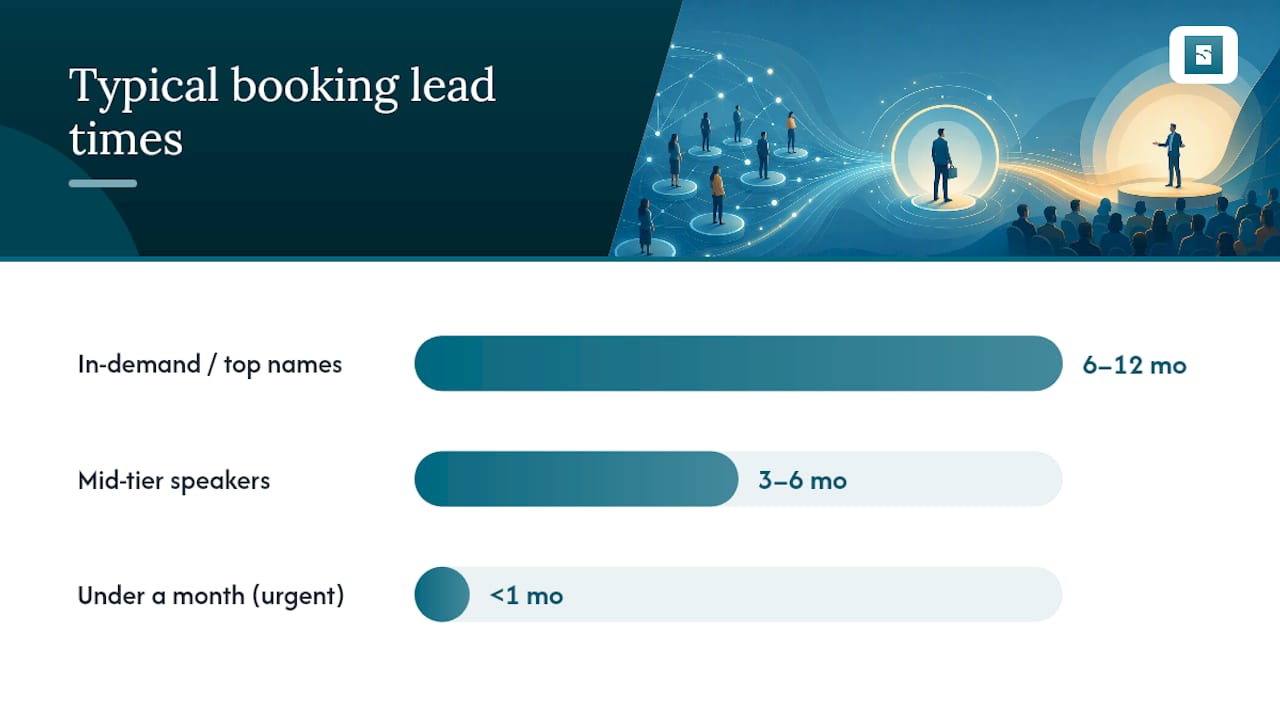
Timing drives price more than most planners expect. In-demand keynote speakers typically book 6 to 12 months in advance, and some top names fill their calendars even further out. Mid-tier speakers usually need 3 to 6 months of lead time. If you're pinned to a date under a month away, your realistic options shrink to virtual formats and speakers with open calendars, which is its own kind of gamble.
Fees swing on a few predictable factors:
- Profile and demand — a recognizable name commands a premium regardless of how well they fit your audience.
- Customization requested — a fully tailored talk costs more than an off-the-shelf keynote.
- Travel and logistics — flights, hotels, and ground transport add up fast for international bookings.
- Add-ons — workshops, breakout sessions, or a post-talk Q&A typically carry separate fees.
Virtual and hybrid formats usually cut travel costs entirely and often shorten the required lead time, since a remote speaker doesn't need to block out full travel days. The smarter budgeting approach: prioritize fit and measurable outcomes over celebrity status. A less famous speaker who nails your specific audience delivers more value than a big name who phones in a generic talk.
Booking a Keynote Speaker: The Process and Contract Checklist
A clean booking sequence looks like this: write the brief, hold shortlist calls, check references, sign the contract, run a tech rehearsal, then send a final briefing a week out. Skipping steps is how last-minute surprises happen.
- Brief. Define the outcome, audience size, format, and date.
- Shortlist calls. Talk to two or three candidates directly, not just their agents.
- References. Confirm with someone who booked them for a comparable event.
- Contract. Lock every term before you stop looking at alternatives.
- Tech rehearsal. Test AV, slides, and internet connection, especially for virtual or hybrid talks.
- Final brief. Send last-minute logistics and any late audience details a week before the event.
Thorough briefs and signed contracts materially reduce last-minute problems and improve how well the speaker tailors their material to your event.
| Contract element | What it should specify |
|---|---|
| Deliverables | Talk length, topic, format, and any workshop or breakout add-ons |
| Fees and payment | Total cost, deposit schedule, and payment deadlines |
| Travel and expenses | Who books what, and any expense caps |
| Technical requirements | AV needs, slide format, internet requirements for virtual sessions |
| Cancellation and substitution | Refund terms and whether a substitute speaker is acceptable |
| Recording rights and IP | Who owns the recording and how it can be used afterward |
A thorough speaker agreement covers these same seven areas at minimum. If you're routing bookings or attendee information through a third-party platform, check that platform's own privacy terms before you share personal data on behalf of your speakers or attendees.
Why Evidence-First Directories Cut Your Vetting Time in Half
Most of the vetting work described above, watching for red flags, chasing references, confirming a speaker actually did what their bio claims, exists because bios are easy to write and hard to verify. An evidence-first directory flips that problem. Listings tied directly to public conference agendas let you confirm a speaker's recent engagements without a single phone call.
That structure changes what you're doing day to day:
- Direct agenda links replace guesswork with a document you can actually check.
- Filters narrow a directory of speakers down to the handful who match your industry and format.
- Saved shortlists mean you're not re-searching from scratch every time a stakeholder asks for updates.
The result isn't a shortcut around vetting. It's a head start that leaves more of your time for the calls and references that actually matter.
A Planner's Perspective on Speed Versus Certainty
Most planners lose time in one of two places: chasing polished bios that can't be verified, or defaulting to whoever's most famous instead of who fits. Six things worth doing every time: define the outcome first, watch full talks, check references, ask about customization, lock the contract early, and rehearse the tech. Skip any of those and you're gambling with someone else's budget.
— Codigos
Find Your Keynote Speaker With SpeakersTrail
There are directories that link every listing to a public conference agenda proving the speaker actually gave that talk, somewhere, recently. No paid placements, no unverifiable claims, just searchable directories you can filter by topic, format, and industry fit.
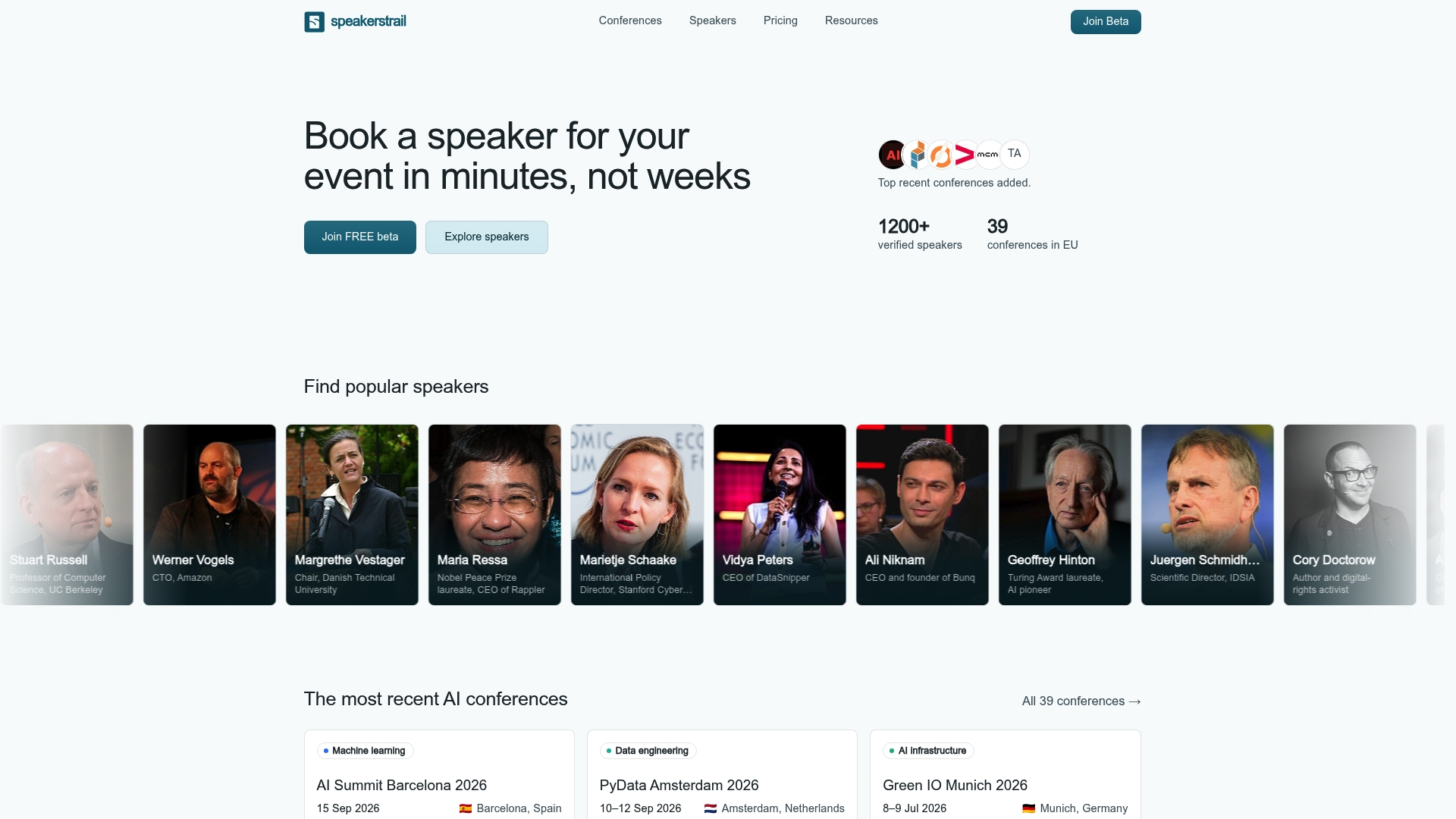
Instead of chasing references through cold email, search the verified speakers directory, save a shortlist of candidates whose evidence checks out, and reach out directly through the platform. If you want to see what a verified profile actually looks like before you commit, browse an example listing like Ade Idowu's speaker page to see the agenda evidence firsthand. Start your search today and cut the vetting phase down to hours instead of weeks.
Sources
- How to Book a Leadership Keynote Speaker | Full Process
- How to Choose a Keynote Speaker | HR & Event Planner Guide
- Speaker Agreement Template: Key Clauses to Include - LegalClarity
FAQ
How Do I Find a Keynote Speaker?
Start by defining the specific outcome you want attendees to leave with, then search a verified directory or speakers bureau for candidates who match your audience and topic. Check availability on three finalists before signing anything, and watch full talks rather than short highlight clips.
How Do I Find a Guest Speaker for Free?
Free guest speakers usually come through your own network: industry associations, alumni groups, or professionals willing to speak in exchange for exposure or travel coverage alone. Reach out directly rather than through a paid bureau, and be upfront about the fact that there's no fee attached.
How Do I Find Speakers for My Conference?
For a full conference agenda, combine a verified directory search with referrals from colleagues who've run similar events. A platform like SpeakersTrail's directory lets you filter by topic and format, then cross-check each candidate's evidence before you start outreach.
How Far in Advance Should I Book a Keynote Speaker?
In-demand keynote speakers typically need 6 to 12 months of lead time, while mid-tier speakers can often be booked 3 to 6 months out. Virtual keynotes can sometimes be arranged on shorter notice since travel isn't a factor.
What Should Be in a Keynote Speaker Contract?
A solid contract covers deliverables, fees and payment terms, travel and expenses, technical requirements, cancellation policy, and recording rights. Leaving any of these out is the most common cause of last-minute disputes between organizers and speakers.